Change or rekey · Toronto
Gate & Building Entry Locks
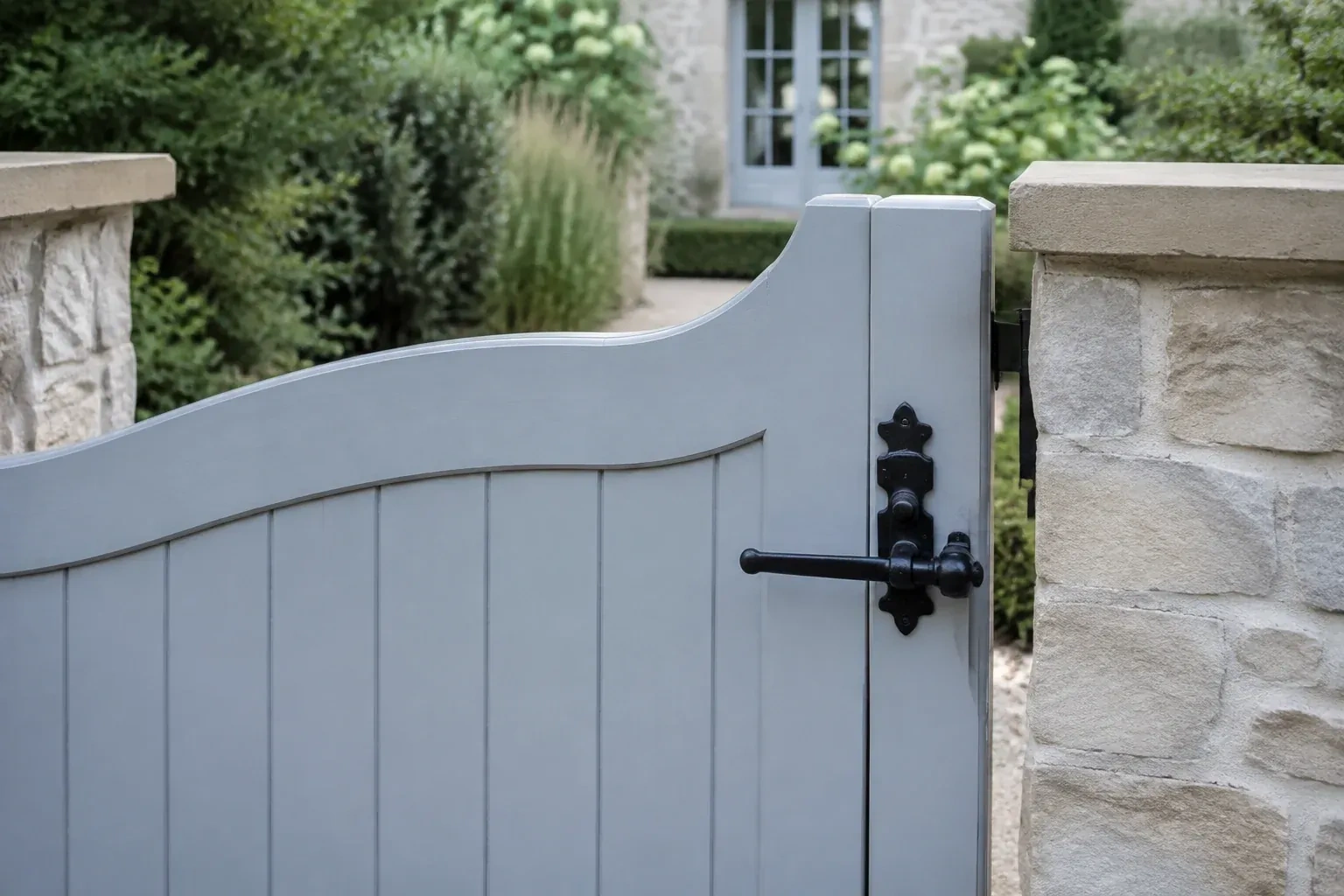
The driveway gate drags a groove into the gravel every time it swings, and the latch stopped catching weeks ago. Now it sits propped shut with a brick, waiting for anyone to walk through and forget to prop it back.
Gate & Building Entry Locks
In plain words
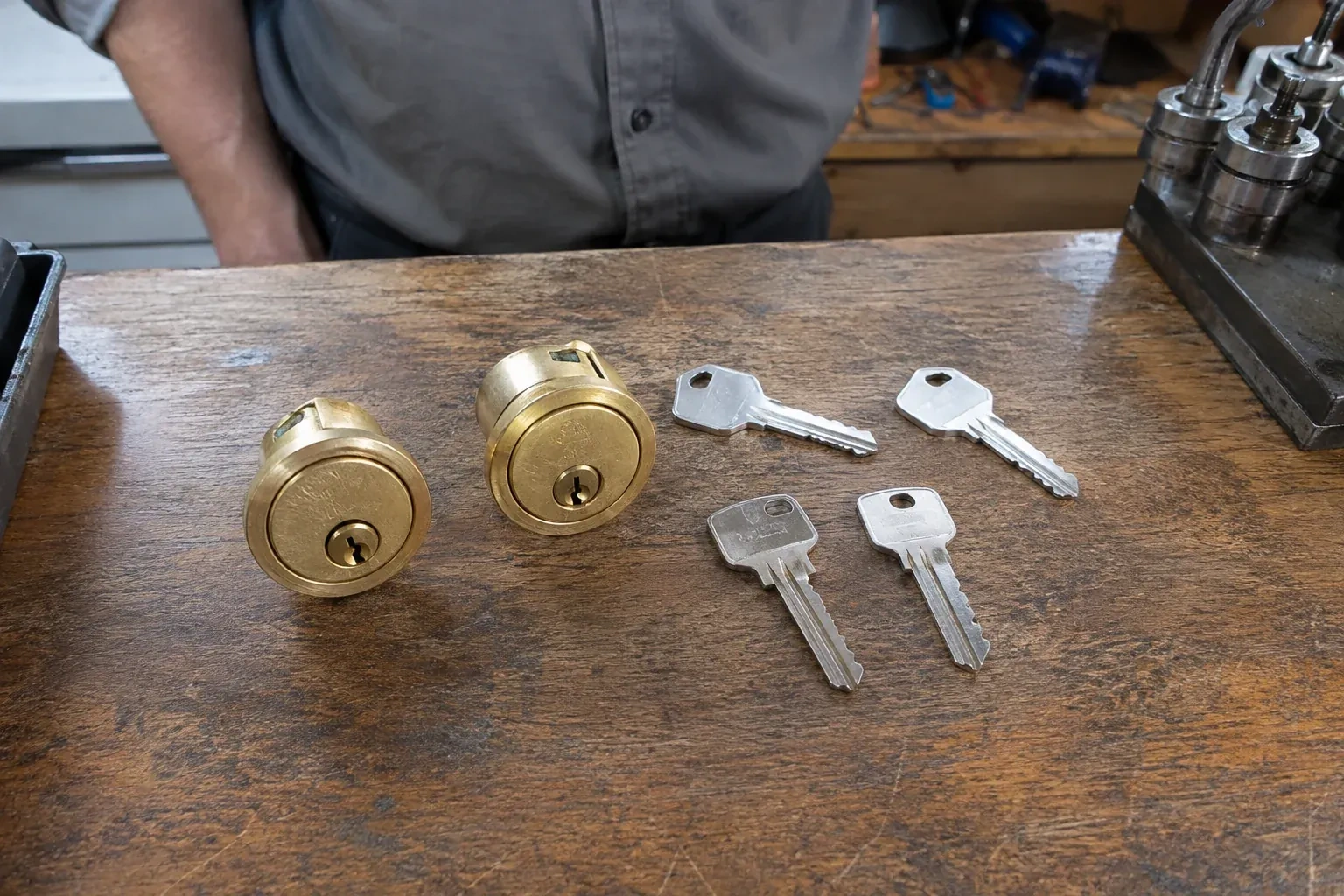
A property that grew its gates one at a time, a shed lock here, a side gate there, tends to end up with a drawer full of keys that only sort of match. This service takes stock of every gate and padlock on the property and works out which ones can reasonably be brought onto a single key, replacing or recombining cylinders as needed. The owner leaves with fewer keys, a clear note of what opens what, and a plan for adding any new gate onto the same system later.
How the visit goesThe driveway gate drags a groove into the gravel every time it swings, and the latch stopped catching weeks ago. Now it sits propped shut with a brick, waiting for anyone to walk through and forget to prop it back.
Toronto
How the visit goes
Checking the closer and hinges together
A closer cannot be judged on its own, because a gate that slams or drifts open is often fighting hinges or a post that have moved. The locksmith checks the closer's current adjustment, the condition of its arm and fittings, and then the hinges or pivots the gate hangs from, along with whether the post itself still stands square. Separating a closer problem from a hinge or post problem here avoids replacing a perfectly sound closer that was only ever fighting a leaning post, or the reverse case.
Resetting the strike and keeper
With the gate or door's adjusted position confirmed, the strike or keeper is repositioned, shimmed or deepened so the latch or bolt has a clean, full throw into it. On a wooden gate post this can mean moving the keeper's screws to fresh wood; on a metal frame it can mean elongating or relocating the mounting holes. The goal is a strike that lines up with the latch across the gate's whole range of motion, in damp weather and dry, rather than only on the one afternoon it happened to be tested.
A gate that closes itself properly
The visit ends with the gate or door swinging through several full cycles while you watch: opening from a stop, closing on its own, and settling into the latch without a slam or a rebound. Anything adjusted along the way, such as the closer's speed or the strike's position, is pointed out so you know what changed. From here the gate should close the same way whether it is pushed gently or blown by wind, which is the actual point of a working closer rather than a lock that only cooperates when someone remembers to push it shut.
Gate & Building Entry Locks
In the van
- Gate locks and latches
- Keyed-alike cylinders
- Hinges, pivots and shims
- Voltage tester for electric strikes
- Cylinder decoder and pick set
What affects the quote
Same fees day, night or weekend
1Number of gates or entries involved
One gate lock is the simplest case. A front gate, a side gate and a shared building entry looked at in the same visit is naturally a longer job with more hardware to work through.
2Time of year and weather on the day
A cylinder frozen solid or a closer stiffened by cold takes patient work before adjustment or replacement can even begin, so a call made during a cold snap is quoted with that extra time in mind.
3Corrosion or damage already present
A cylinder that is merely stiff is a lighter job than one that is visibly pitted, seized or cracked from years of weather exposure, and the quote reflects whichever condition the hardware is actually found in.
Gate & Building Entry Locks: questions
How do you decide whether to repair a gate lock or replace it?
The decision follows what the assessment actually finds rather than the age of the hardware alone. A cylinder that is only stiff or slightly worn is usually serviced and left in place, while one that is pitted, cracked or built to a grade unsuited to its exposure is replaced. The same logic applies to a closer or hinge: adjustment first, replacement only once the part itself has genuinely failed. You are told which category the hardware fell into and why before any work proceeds.
Does this service cover the gate itself, or only the lock?
Both, where the two are connected, which on a gate they usually are. A locksmith working on a gate lock also looks at the hinges, the post and the closer, since a lock rarely fails on its own when the real cause is a sagging gate or a post that has shifted. Work that goes beyond hardware the locksmith carries, such as rebuilding a rotted post or a damaged fence panel, is flagged so it can be handled by whoever normally does that kind of repair.
If the lock gets replaced, can the existing intercom or buzzer stay?
In most cases, yes. The buzzer, keypad and intercom are generally separate from the mechanical lock or cylinder, so replacing the lock itself does not usually mean replacing the electronic side too. Where the two are connected, such as an electric strike wired to the same frame as a new mechanical lock, the locksmith checks the fit and wiring before starting so the electronic system keeps working once the new hardware is in place. Anything that would need to change is explained beforehand.
Change or Rekey Locks
Gate & Building Entry Locks near you
For a household in Toronto the common requests are a rekey after moving in, a lockout, a deadbolt that grinds, and a lock that finally needs replacing. For a business they are storefront hardware, staff key control and exit devices. Both lists, and a few less common jobs, are laid out here.