Change or rekey · Toronto
Deadbolt Installation
Someone tried the door last winter. The frame took it, but the strike plate is bent, one screw hole is stripped, and the bolt sits in the pocket at a slight angle.
Deadbolt Installation
In plain words
The right deadbolt for a door depends on how the door is used and where it sits. A front door that a family goes through twenty times a day needs a durable mechanism and a finish that shrugs off salt spray and sun; a side door in a laneway wants a heavy bolt and a strike that reaches the framing. Residential deadbolts carry letter grades for security, durability and finish, and heavier commercial-pattern bolts carry numbered grades, so there is a plain way to compare. The locksmith talks through those options, then fits the one you choose with the same care whichever grade it is.
How the visit goesThe door from the garage into the kitchen closes on a passage knob with no lock at all. Anyone who opens the garage is one turn of a handle from the house, and the insurance renewal form has a question about exactly that.
Toronto
How the visit goes
The frame behind the strike
A bolt is only as good as what it throws into, so the jamb gets a hard look before anything is ordered. The locksmith checks whether the jamb is wood or steel, whether it is backed by solid framing at lock height or by a gap of shims and air, and whether earlier screws have torn out or been stripped. A jamb that flexes under a palm tells its own story. Where a strike has been fitted before, the old pocket is examined for depth and position, since a shallow or offset pocket is the usual reason an existing deadbolt feels stiff. This check decides between a plain strike, a reinforced strike with long screws, or a full-length jamb reinforcer.
Fitting the bolt and setting the backset
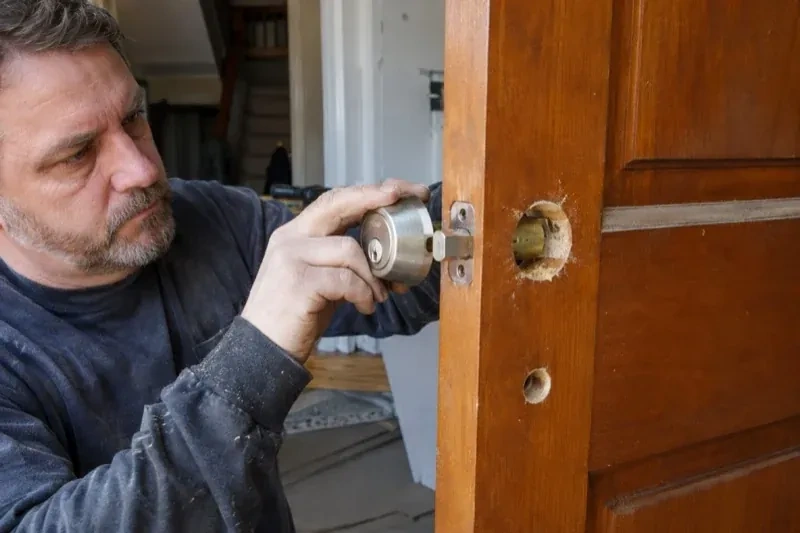
The bolt assembly slides into the edge bore with the faceplate set the way its maker marks, commonly the word "top" facing up. Most residential bolts adjust between 60 mm and 70 mm by twisting or sliding the faceplate, and the locksmith sets it to the backset measured earlier so the tailpiece from the cylinder lands in the centre of the bolt's cam. The bolt is secured with its two short screws, and the locksmith works it in and out by hand to feel that it runs freely through the door without rubbing on the bore. On an insulated door a round drive-in collar may replace the flat plate where the edge is too thin to mortise.
A record for the home file
You should know what is on your door in plain terms, so the visit closes with a short account: the model and grade of deadbolt fitted, its finish, the backset and bore it sits in, whether the cylinder was keyed alike or set to a new key, how many keys were cut, and what was done on the frame side. For a rental, this note is useful for the landlord or building manager, who under tenancy rules is entitled to know what lock is on the unit and to hold a key. For an owner it is one line in the house file that makes the next locksmith visit, whenever it comes, a simpler conversation.
Deadbolt Installation
In the van
- Jamb reinforcer
- Manufacturer's bore template
- Rekeying pins and key blanks
- Boring jig and 54 mm hole saw
- Strike box
What affects the quote
Same fees day, night or weekend
1Glass near the lock
A captive thumb-turn, laminated glass, security film or a relocated bolt height each carry their own cost, and the choice you make about glass shapes that part of the quote.
2Keying alike or a fresh key
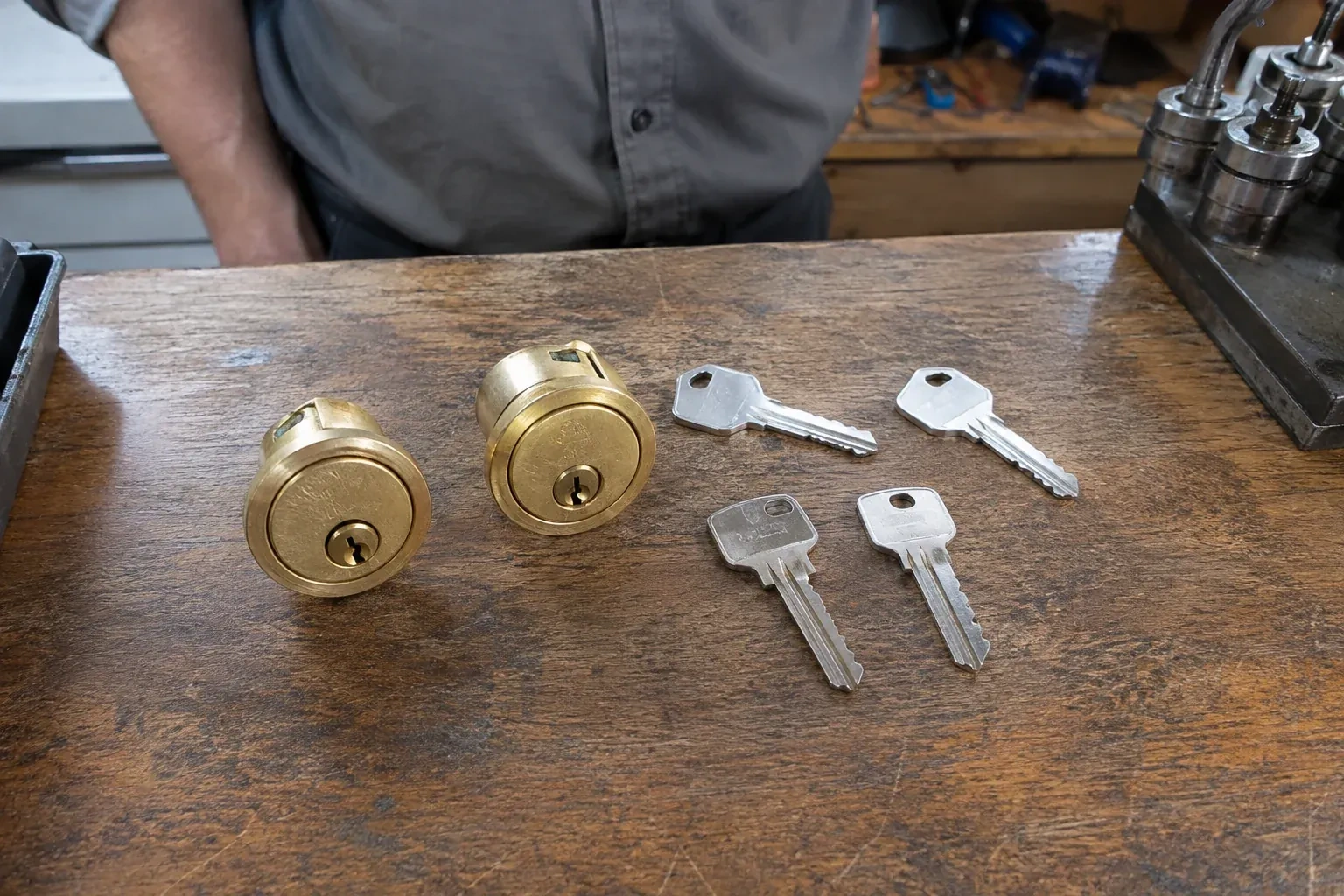
Pinning the new cylinder to your existing key, or setting several doors to a new key, is bench work quoted per cylinder, plus the number of keys you ask to have cut.
3Door material
Solid wood, steel-clad and fibreglass doors are each cut differently. Metal skins call for slower cutting and cleanup of filings, so the material is one of the first things a quote takes into account.
Deadbolt Installation: questions
What should I have ready before the locksmith arrives?
Know which doors you want bolted, what they are made of, and whether each already has a deadbolt or only a knob. A photo of the door face and edge helps. Have any existing keys to hand, decide whether you want everything on one key, and mention glass near the lock, a storm door in the same opening, or a rental agreement. If you have already bought hardware, keep the box and template together.
What do lock grades mean when I am picking a deadbolt?
Residential deadbolts are graded under an industry standard in three categories, security, durability and finish, with letter grades from C through A, so a lock marked with three A grades has met the highest level in each. Heavier commercial-pattern bolts are graded 1, 2 or 3, with 1 the highest. The grades let you match hardware to a busy family door or an exposed side entrance without relying on the weight of the box.
Does the finish of the deadbolt matter beyond looks?
It does on an exposed door. Winter salt spray, summer sun and humid air all work on the outside trim, and residential deadbolts carry a finish grade that reflects how well the coating resists them. A lifetime or PVD-style finish stays bright longer on a south-facing or roadside door, while a sheltered porch door can carry any finish you like. Matching the knob or lever below is mostly a matter of taste.
Change or Rekey Locks
Deadbolt Installation near you
For a household in Toronto the common requests are a rekey after moving in, a lockout, a deadbolt that grinds, and a lock that finally needs replacing. For a business they are storefront hardware, staff key control and exit devices. Both lists, and a few less common jobs, are laid out here.