Locksmith · Toronto
Notes for homeowners and drivers
A door that drags, a key that needs a jiggle, a fob that works from closer than it used to. Each is a small signal worth understanding. Our advice pages explain what those signals mean and how to act on them before they become a lockout.
- Issue 1Commercial Rekeying: how the work is doneChanging the locks answers today's question; key control keeps it answered. During a commercial rekey the new keys are stamped with a serial code rather than the business name or address, so a…Read
- Issue 2Deadbolt Installation: reading the quoteResidential deadbolts are graded under an industry standard in three categories, security, durability and finish, with letter grades from C through A, so a lock marked with three A grades has met the…Read
- Issue 3Vintage Mortise Lock Service: what to note firstThe brass knob on the front door of your century home turns, but nothing happens on the other side. The latch stays tucked in, the door swings free, and the only thing holding it shut is the deadbolt…Read
Frequently asked questions
Lockout Services
What if the door is stuck rather than the lock?
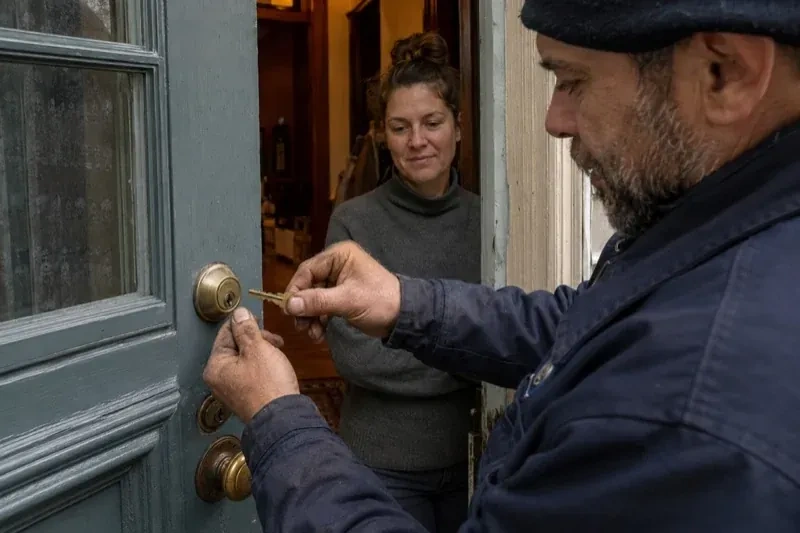
This is more common than people expect, especially in older houses and at the change of seasons. A door that has swollen, sagged on its hinges or been pushed out of square by thick weatherstripping can pin the bolt against the strike so it will not draw back even with the right key. The locksmith relieves the pressure to free the bolt, then adjusts the strike, hinges or seal so the door closes and locks without a shoulder. Home Lockout Service
Our door uses fobs and the reader is dead. Can you get us in?
Yes, and usually without disturbing the access system. Many readers and electric strikes go dark because a power supply, breaker or backup battery has failed, and restoring power reopens the door. Where a mechanical override cylinder is fitted, it opens like any other lock; not every system includes one. An ordinary magnetic lock releases on its own once its power is actually removed, so a genuine power loss opens that door without waiting on a remote release. Afterwards, credentials and schedules are confirmed with whoever manages the system. Business Lockout Service
Part of the key is sticking out. Can I just pull it with pliers?
If a good length shows and the plug is at its normal rest position, a firm straight pull sometimes works. The risk is pushing instead of pulling, or twisting, which drives the piece deeper and can bend a pin. If it does not come on the first gentle try, stop there and leave it for extractor tools, which grip the cuts without loading the cylinder. Broken Key Extraction
Can a split jamb be repaired, or does it need replacing?
Many can be repaired. A split along the grain is pressed back together, glued with a two-part wood epoxy and held by a steel repair plate or a boxed strike screwed through it into the stud, so the fasteners reinforce the repair as well as the lock. Missing wood is built up with filler or a fitted piece. A jamb that has pulled off the framing along its length or shattered around the pocket is replaced by a carpenter, with the opening secured until then. Break-In Damage Lock Repair
Change or Rekey Locks
Can the garage side door, shed and gate be included?
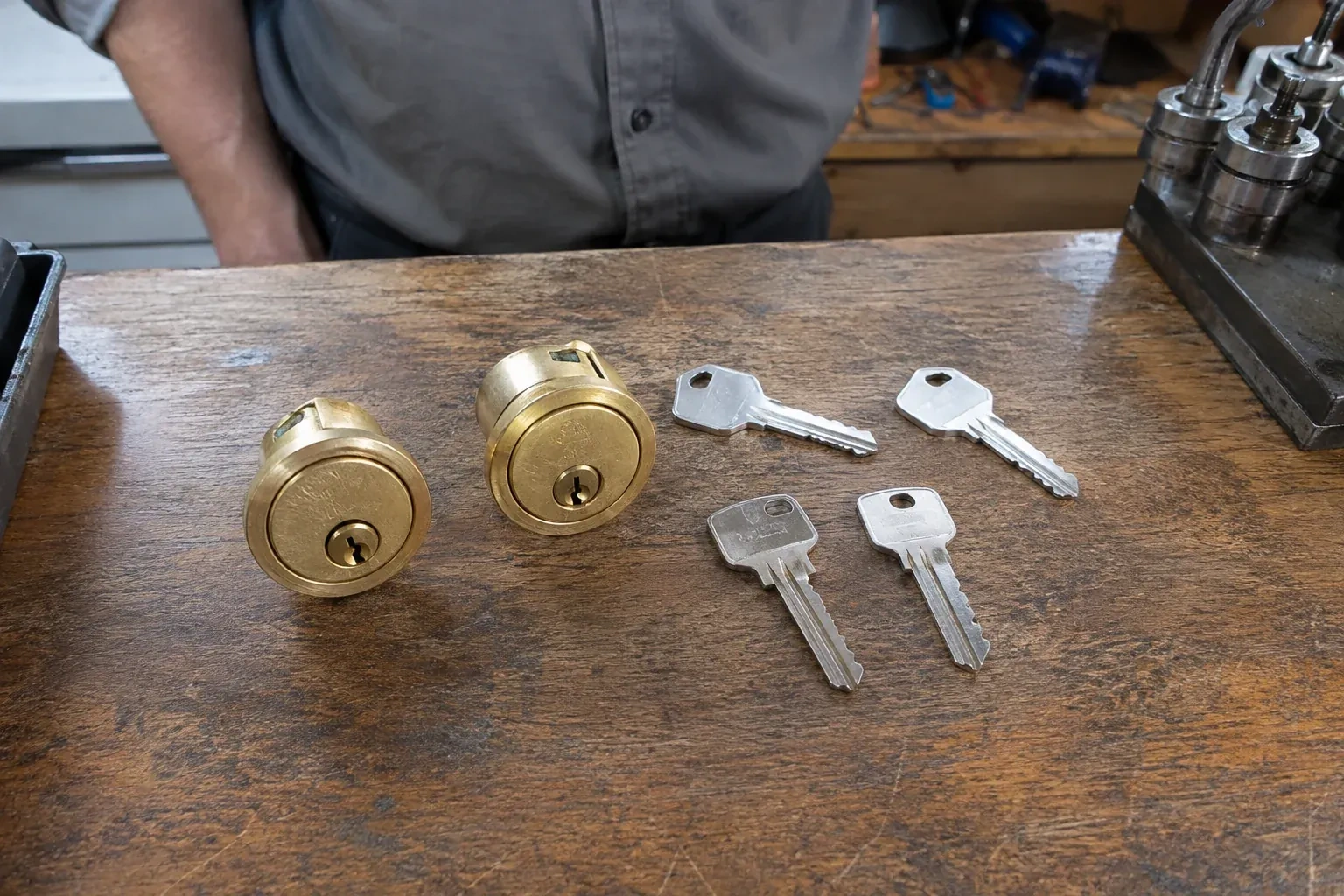
Yes, and they usually should be, because a side door into the garage is the opening most often forgotten and left on an old key. Any pin-tumbler cylinder on the property can be pinned to the house key if its keyway allows: the man-door into the garage, a shed, a keyed gate latch, and many padlocks. A mailbox lock is usually a small cam lock that is replaced rather than repinned. Mention every opening when you book so the right blanks and cylinders are in the van. Lock Rekeying
What should I have ready before the locksmith arrives?
Know which doors you want bolted, what they are made of, and whether each already has a deadbolt or only a knob. A photo of the door face and edge helps. Have any existing keys to hand, decide whether you want everything on one key, and mention glass near the lock, a storm door in the same opening, or a rental agreement. If you have already bought hardware, keep the box and template together. Deadbolt Installation
My door has glass beside it. Should I fit a deadbolt keyed on both sides?
A keyed interior cylinder means finding a key to get out, which is not what you want on a door people use every day. The steadier answer for a door with glass is a single-cylinder deadbolt with a thumb-turn, combined with a reinforced strike, a longer bolt and a security film or laminated glass in the sidelight. Lock Replacement & Upgrade
The key turns all the way round but the bolt stays put. What is wrong?
On a cylinder mortise lock this points to the cylinder rather than the case. The set screw that holds the cylinder in the door has loosened or stripped so the whole cylinder rotates, or the cam on the back of the cylinder has worn or is the wrong shape and no longer catches the bolt lever. Both are fixed by resetting or replacing the cylinder and its set screw, and the case itself is usually fine. Vintage Mortise Lock Service
High Security Locks
How should I keep a written record of my new combination?
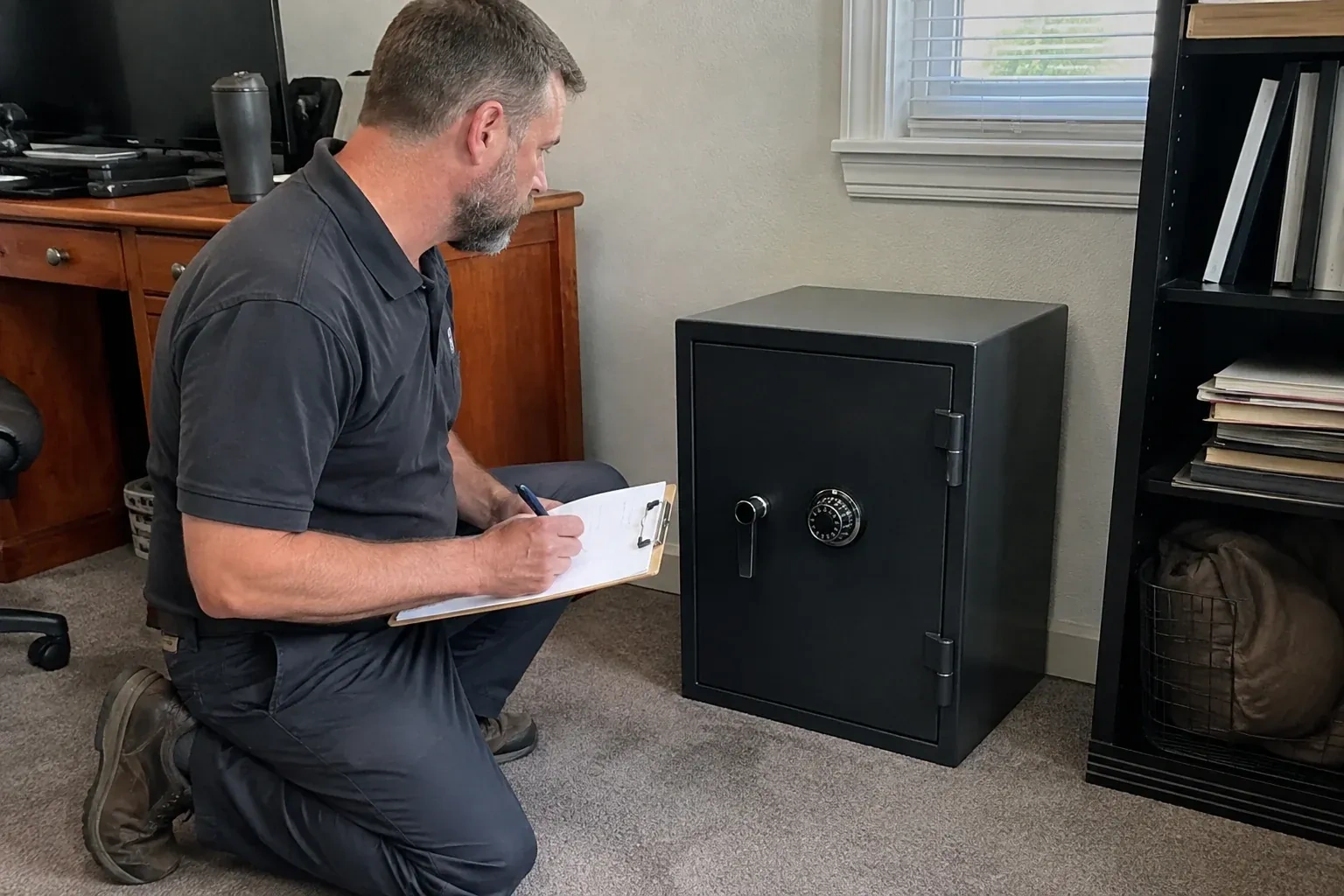
Somewhere away from the safe itself: a sealed note held by a manager, a separate secure file, or a password manager already used for other business records all work better than a note taped to or near the safe, which is one of the first places anyone would check. Deciding who updates that record when staff change is worth agreeing on before this visit ends. Safe Opening & Combination Change
What is involved in servicing an older safe instead of replacing it?
Servicing works through the same checks as a new installation in reverse: the bolt-work is opened, cleaned, and lubricated, the lock is tested and adjusted if it binds, the anchoring underneath is confirmed or added if it was never done, and batteries are replaced if the lock is electronic. Many older safes have solid steel bodies that outlast the mechanism inside them, which makes servicing a practical route rather than starting over. Safe Installation & Servicing
Will the new cylinder fit my existing locks?
Usually. High security cylinders are made in the common formats: key-in-knob and lever, rim, mortise and interchangeable core, and many are designed to drop into popular residential and commercial locks. The locksmith identifies your format and confirms fit before ordering. Where a lock is an odd size or in poor shape, a matching lock body is fitted instead, and the door preparation is reused wherever it is standard. High Security Locks
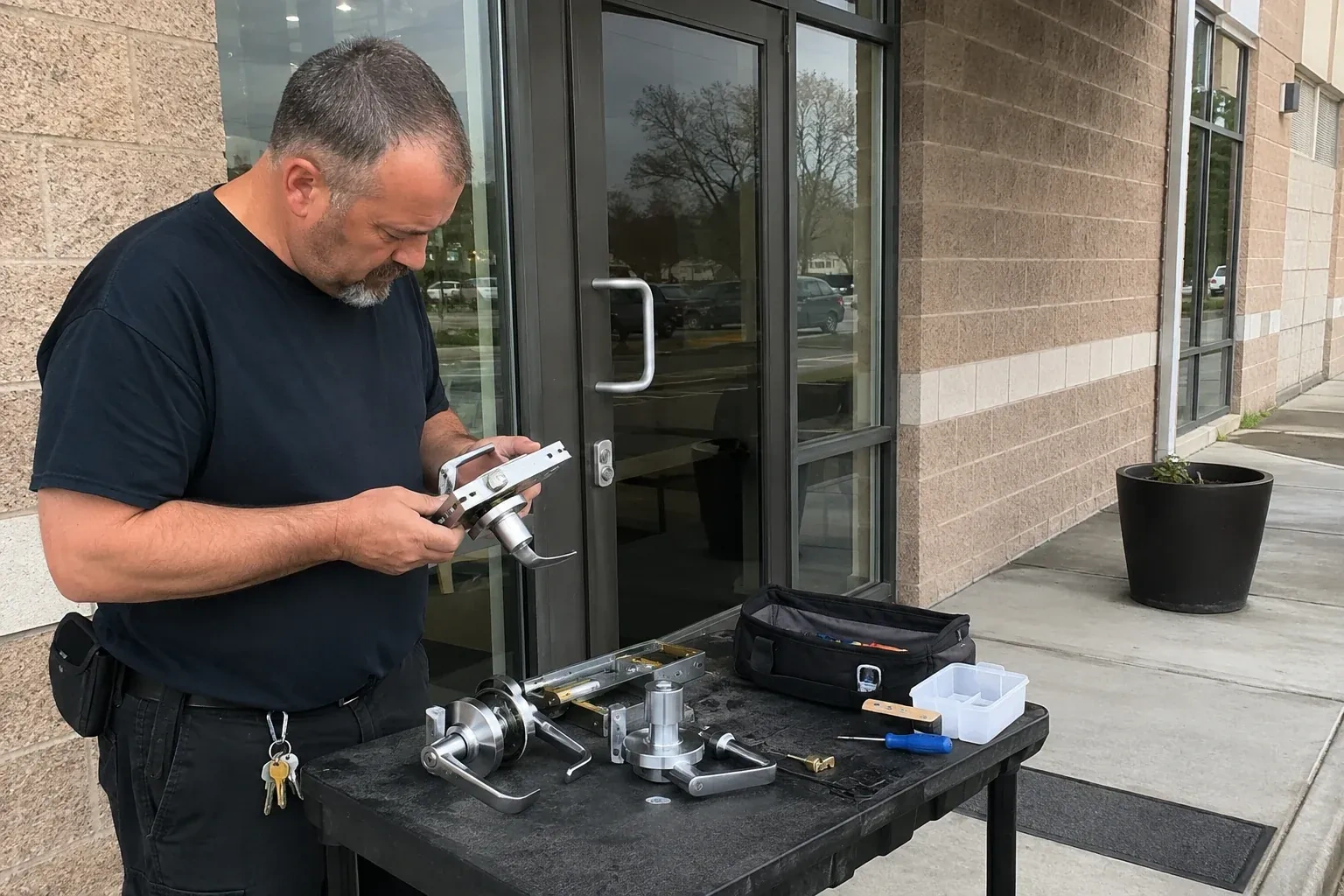
Commercial Locks
Can all our doors be put on a single key?
Yes, if the cylinders share a keyway or can be fitted with ones that do. Keying everything alike is popular with small shops because staff carry one key and spares are simple. The trade-off is that one key then opens the cash room as readily as the front door. Many businesses choose a middle path: the doors everyone uses on one key, the sensitive rooms on another, and an owner's master that opens both. Commercial Rekeying
How do you decide how many sub-master levels a business actually needs?
The number follows the organization, not a preference for tidy diagrams. Genuinely distinct groups, such as separate departments or floors with different access needs, each justify a level; access differences that exist only on paper usually do not. A hierarchy with more levels than the business uses in practice is harder to administer without making anyone's day-to-day access meaningfully better. Master Key System Design
What credential types are available: cards, codes, fobs, phones?
A proximity card or fob held near a reader, a code typed on a keypad, or a mobile credential read from a phone are all in common use, and a single building can mix them by door or by person. Cards and fobs are simple to issue and switch off individually; a keypad needs no card to lose but a shared code eventually gets passed around; a mobile credential ties entry to a device the person already carries. Access Control Installation
How is panic hardware different from fire exit hardware?
Panic hardware and fire exit hardware share the same push-to-release action, but fire exit hardware is additionally tested and listed for use on a fire-rated door assembly. That extra listing matters because a fire door has to keep an active latch bolt at all times; it cannot carry a mechanical dogging function the way ordinary panic hardware sometimes can, so the two are not interchangeable on a rated opening. Panic & Exit Hardware
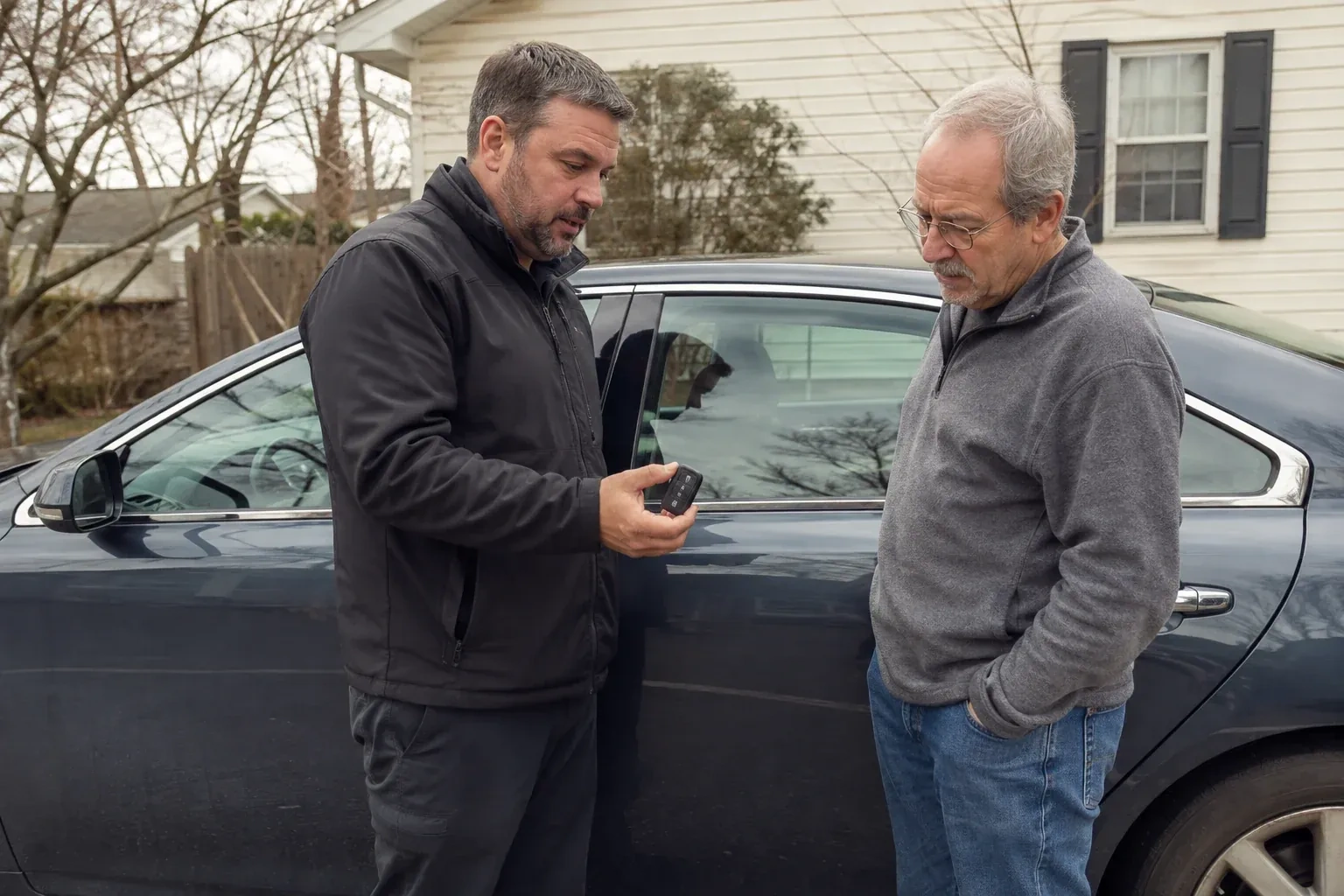
Car Keys
The alarm went off. Is that a problem?
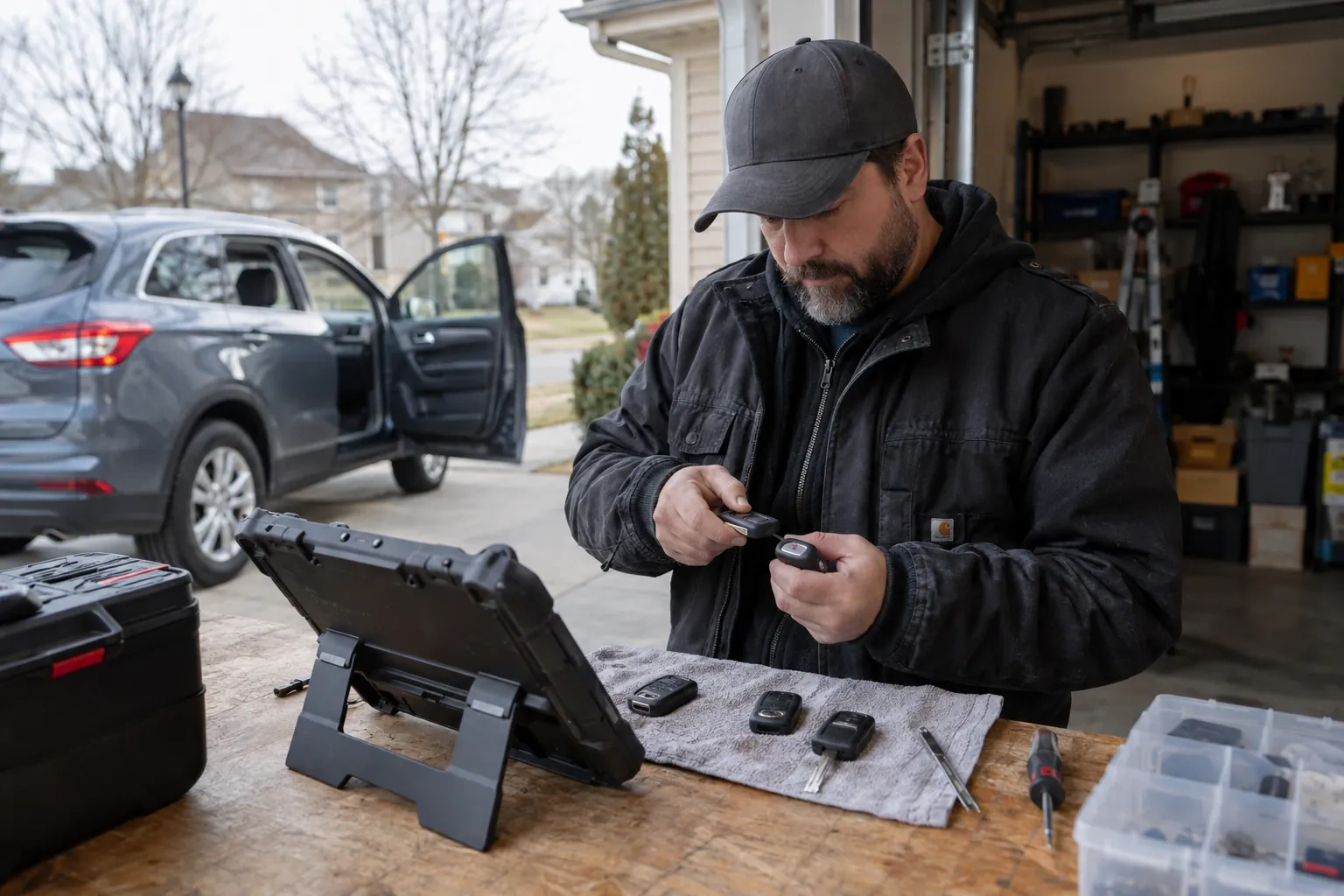
It is expected. Opening a door without the fob or key wakes most factory alarms, and quieting them is part of finishing the job: a turn of the key in the door or ignition, or a press of the fob once the car has power, usually does it. An aftermarket alarm is reset from its own valet switch. The locksmith stays until the car is quiet and every lock has been cycled. Car Lockout Service
What is a transponder key, and does my car have one?
A transponder is a small chip in the head of the key with no battery of its own. When the key is in the ignition, or the fob is inside the cabin, the immobilizer sends a signal and the chip answers with a code; if the code is unknown, the engine is prevented from running. Every new light vehicle sold in Canada since September 2007 has been required to have an immobilizer, so almost any car from that time on uses one. Car Key Replacement
Is cloning the same as programming a new key?
They solve the same problem differently. Cloning copies the working key's existing code onto a new chip, which some vehicles' systems permit directly. Programming instead has the vehicle itself learn a brand-new code and accept it as an additional valid key, which is how most recent vehicles with rolling codes or added cryptography are handled, since their systems are built specifically to resist straightforward copying. Spare Car Key Duplication
What if my vehicle turns out to need dealer-only programming?
Some manufacturers restrict fob programming to a security-gated procedure that only a dealer system or an approved access pathway can complete. When a vehicle falls into that category, the visit identifies it early, explains what the vehicle specifically requires, and documents anything already confirmed, such as a compatible fob, so the eventual dealer visit is not starting the diagnosis over from nothing. Key Fob Programming
On-site assessment preferred
Request a visit
Send a photo of the lock. Call about rekeying your new home.