Commercial · Willowdale
Panic & Exit Hardware in Willowdale
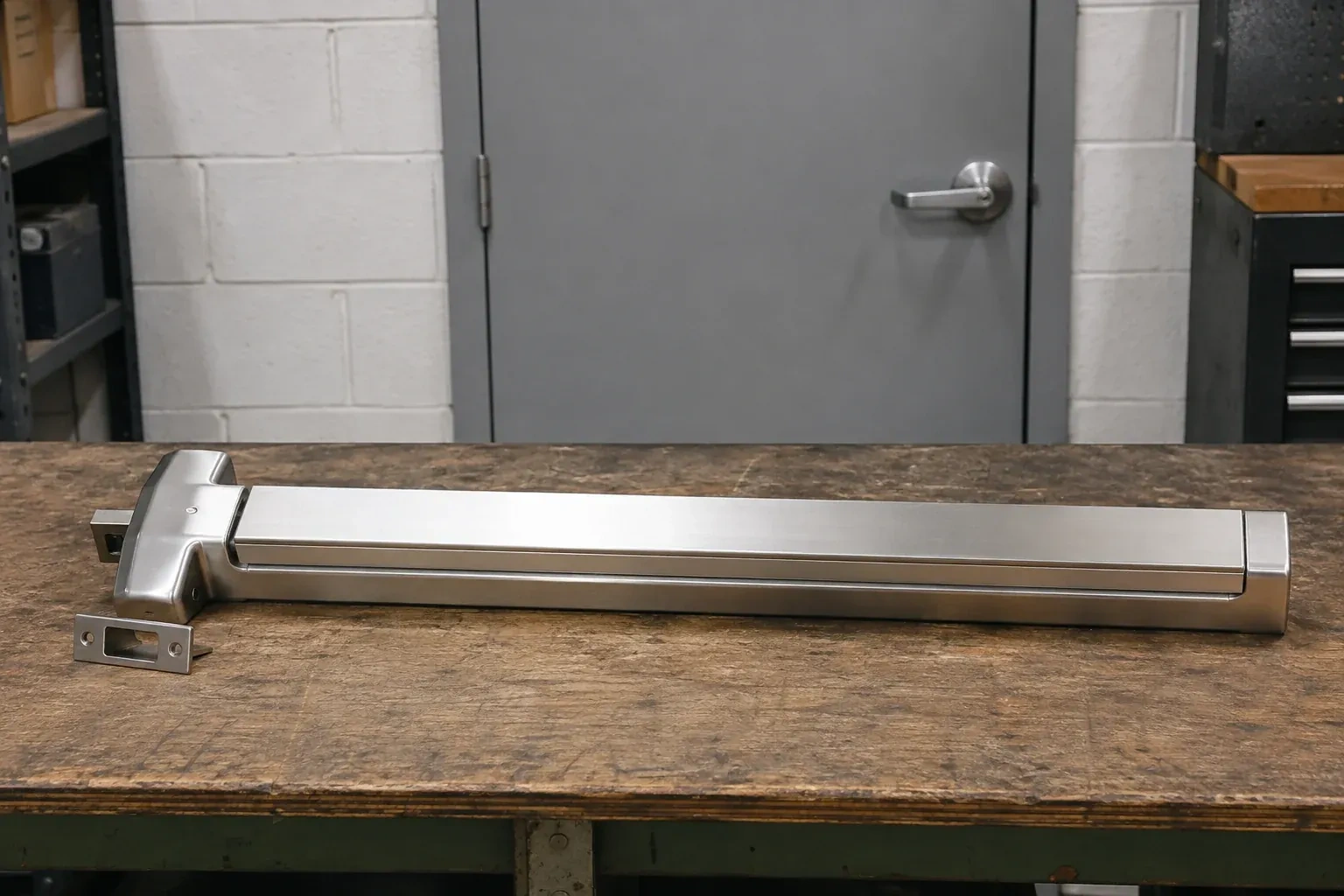
The fire inspector's note is blunt: the banquet hall's second exit still turns on a deadbolt, and the crowd it is rated to hold needs a door that opens under one motion, no key involved.
Panic & Exit Hardware
In plain words
A pair of doors is its own small project, and not every pair needs the same approach. Some rim-device pairs keep their mullion and latch each leaf independently with no set closing order. Where sequencing does matter, one leaf is chosen as the inactive leaf and closes first, guided by a coordinator so the active leaf's device can seat properly into the strike or into an astragal on the inactive leaf. Removing a centre mullion calls for a compatible replacement arrangement on each leaf, which can matter for wheelchair access or for moving equipment through.
How the visit goesThe fire inspector's note is blunt: the banquet hall's second exit still turns on a deadbolt, and the crowd it is rated to hold needs a door that opens under one motion, no key involved.
Willowdale
How the visit goes
Confirming why the door needs this hardware
The visit starts with the reason exit hardware is being discussed at all: an occupant load that has crossed a threshold, a fire inspector's note, a new use for the room, or an existing device that has stopped working the way it should. Confirming this first decides everything downstream, because a door required to have a releasing device is treated differently from one where an owner simply wants easier egress. Whoever is responsible for the building is asked directly what triggered the visit, and the answer is recorded alongside the door it concerns before any hardware is chosen.
Labelling, signage and the dogging key
Any signage the opening needs, such as a label identifying the door as an exit or noting an alarm, is fitted alongside the hardware rather than left for later. Where the device carries a dogging function on a standard opening, the key or keyed cylinder for it is handed to whoever the building's management names as responsible, along with an explanation of when dogging is appropriate; on any door that sits in a fire separation, mechanical dogging is left off the device entirely and is never installed as a management choice.
A maintenance rhythm worth keeping
Exit devices are mechanical hardware and benefit from the same light attention as any other: a periodic check that the release force has not crept up, that the latch still seats fully, and that nothing has been added to the door that would block its exit function. Fire door assemblies carry their own inspection and testing rhythm, and folding the exit hardware into that same routine check keeps the whole opening, not just the lock, in the condition it was fitted in.
Panic & Exit Hardware
In the van
- Strike and reinforcement
- Signage and labels
- Dogging key or keyed cylinder
- Outside trim (pull, lever or cylinder)
- Astragal and mullion hardware
What affects the quote
Same fees day, night or weekend
1Access to the opening
A ground-floor commercial door is straightforward to reach. An opening behind scaffolding, up a stairwell with no elevator, or in a space still under active construction takes longer to work at.
2Outside trim selected
A plain pull is the simplest outside trim. A lever with a key cylinder, or a trim matched to other hardware finishes in the building, involves more parts and more fitting time.
3Number of keys or dogging cylinders
Cutting keys for the outside trim and providing a dogging key or keyed dogging cylinder for the device is counted individually, the same way any keyed hardware is.
Panic & Exit Hardware: questions
How is panic hardware different from fire exit hardware?
Panic hardware and fire exit hardware share the same push-to-release action, but fire exit hardware is additionally tested and listed for use on a fire-rated door assembly. That extra listing matters because a fire door has to keep an active latch bolt at all times; it cannot carry a mechanical dogging function the way ordinary panic hardware sometimes can, so the two are not interchangeable on a rated opening.
Can I still lock the door from outside?
Yes. The releasing device only governs the inside of the door; the outside gets its own trim, a pull, a lever with a cylinder, or a keyed cylinder alone, chosen for how that door is entered. Locking or unlocking that outside trim has no effect on the inside crossbar, which always releases the latch under a push, so entry security and exit function are handled as two separate questions.
How is occupant load actually counted for this decision?
Occupant load is calculated from the floor area and the intended use of the room, using published factors for that occupancy type, rather than a headcount taken on a busy night. A building official or a locksmith familiar with the calculation can work through it for a specific room, and the result is what decides whether the exit doors serving that room need a releasing device.
Commercial Locks
- Master Key System DesignThe new wing was built with its own brand of cylinder, so the two-year-old keys from the original…
- Access Control InstallationThe back door of the shop runs on one key, and by now it lives on six different rings: yours, two…
- Commercial-Grade Lock ReplacementA new tenant moved into the unit next door, and the property manager just found three different…
Panic & Exit Hardware near you
Here is the range of lock work we do for homes and businesses in Willowdale: opening doors when the key is missing, rekeying and changing locks, fitting deadbolts and high-security cylinders, servicing commercial hardware, opening and resetting safes, and cutting keys, including the occasional vehicle key when a household needs one.