Commercial · Newton Brook
Access Control Installation in Newton Brook
The back door of the shop runs on one key, and by now it lives on six different rings: yours, two managers, a cleaner, a supplier who restocks early, and a keyholder nobody quite remembers approving.
Access Control Installation
In plain words
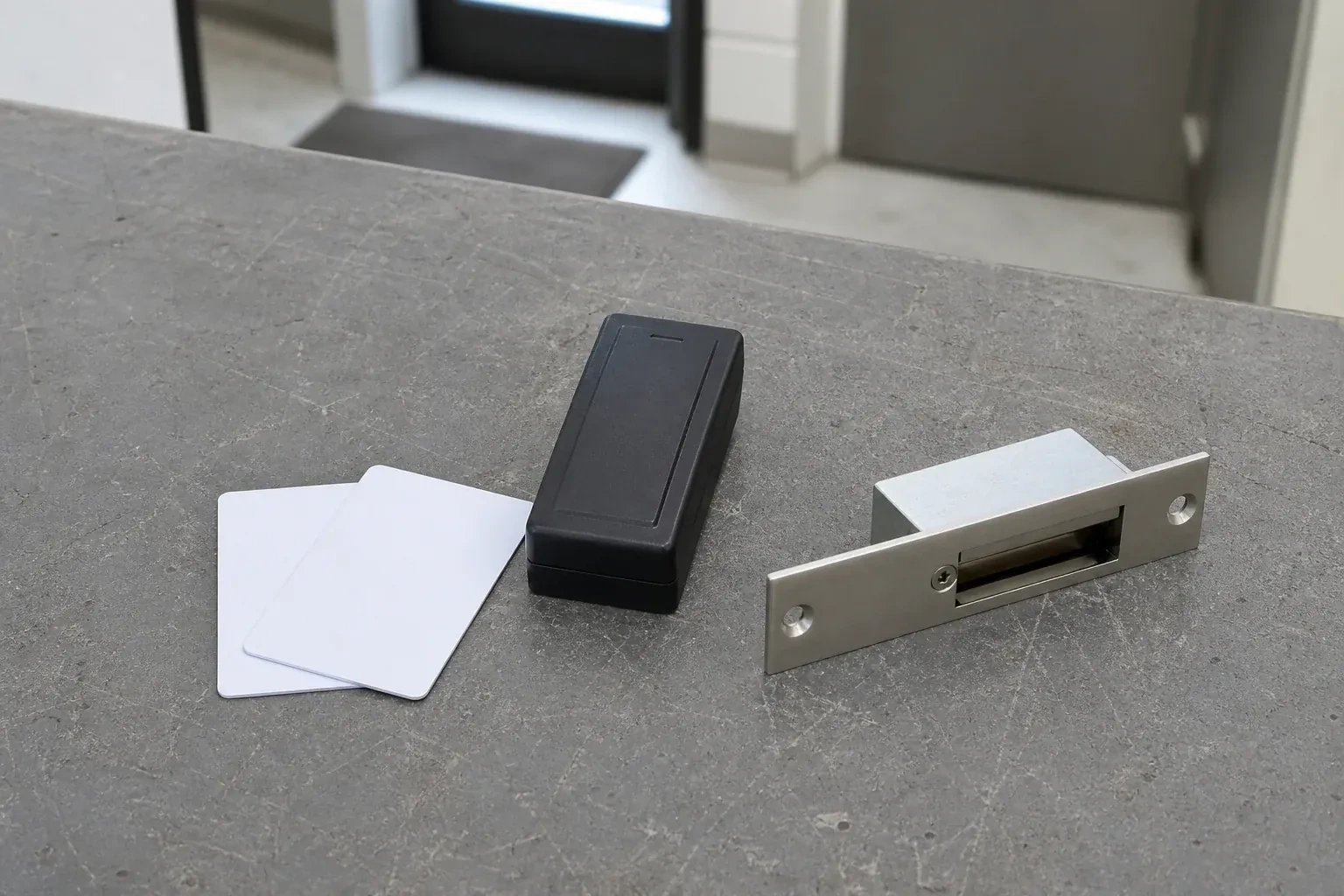
An exit door does not stop being an exit once it is wired into an access control system. A magnetic lock on that route is paired with a request-to-exit device so anyone leaving is never held up looking for a code, and it is tied into the fire alarm so an alarm signal releases the door on its own. The installation is planned around the building's exits from the start rather than added around them afterward, so the system controls who comes in without complicating how people get out.
How the visit goesAnother employee left and the keys never came back. You changed the locks again, cut copies for everyone who stayed, and paid for a job that repeats itself the next time someone quits, taking a working key out the door with them.
Newton Brook
How the visit goes
Confirming what the system needs to do
Before any hardware is chosen, the locksmith sits down with whoever will administer the system afterward and works out what it actually needs to do: which doors deserve their own control, whose entry needs a record, whether one opening keeps different hours than another, and who should be able to add or remove a credential once the job is finished. This conversation shapes every choice that follows, from a single standalone keypad on one door to a networked controller running several openings on one schedule, and it is where the business, not the installer, sets the priorities the system is built around.
Fitting a magnetic lock with its release device
A magnetic lock is mounted to the head of the frame with a matching armature plate on the door, and it is never installed alone: a request-to-exit device, usually a motion sensor or a mechanical push bar, is wired in to drop power to the magnet the moment someone inside moves to leave, and a connection to the fire alarm panel does the same the instant an alarm activates. The lock is aligned so the plate meets the magnet squarely across the full swing of the door, since even a small gap lets a determined push defeat the hold.
Watching the doors through a change of season
Steel and aluminum frames move slightly with temperature, and a wood door can swell in a humid spell or shrink once the heat comes on for winter, either of which can nudge an electric strike or a magnetic lock's armature plate out of the alignment it was installed with. A door that used to release cleanly and now needs a firm pull, or a magnetic lock that seems to hold less securely than it did in the spring, is usually telling you about the door rather than the electronics, and an alignment check at each change of season keeps it from becoming a pattern.
Access Control Installation
In the van
- Low-voltage cable
- Door position switches
- Mechanical override cylinders
- Request-to-exit devices
- Electric strikes
What affects the quote
Same fees day, night or weekend
1How much door and frame preparation is needed
A frame that already suits an electric strike needs less preparation than one that must be mortised, reinforced, or matched with a different strike body, and an older or non-standard door can add its own preparation.
2Distance between the doors and the controller
A building where every controlled door sits close to where the controller will be mounted needs less cable and fewer pull points than one with openings spread across several floors or a large footprint.
3Condition of the existing hardware
A working mechanical lock that can stay in place as the override is a simpler starting point than an old, failing keypad system that has to be removed before new hardware goes on in its place.
Access Control Installation: questions
What credential types are available: cards, codes, fobs, phones?
A proximity card or fob held near a reader, a code typed on a keypad, or a mobile credential read from a phone are all in common use, and a single building can mix them by door or by person. Cards and fobs are simple to issue and switch off individually; a keypad needs no card to lose but a shared code eventually gets passed around; a mobile credential ties entry to a device the person already carries.
How long does an installation usually take?
A single standalone door is usually finished within a day, including testing and training. A building with several networked openings, cabling to run and a controller to program takes longer, and is often planned across more than one visit so cabling, hardware, and software configuration each get proper attention rather than being rushed through in one pass.
What's the difference between a standalone and a networked system?
A standalone unit is a self-contained reader and lock at one door, holding its own list of credentials, though it can still need a power or network connection to run. A networked system ties several doors to shared management, sometimes through more than one controller, aggregating schedules and combining logs across all of them. The right choice depends on how many doors need controlling and whether the business wants a single place to manage all of them, rather than one being universally better.
Commercial Locks
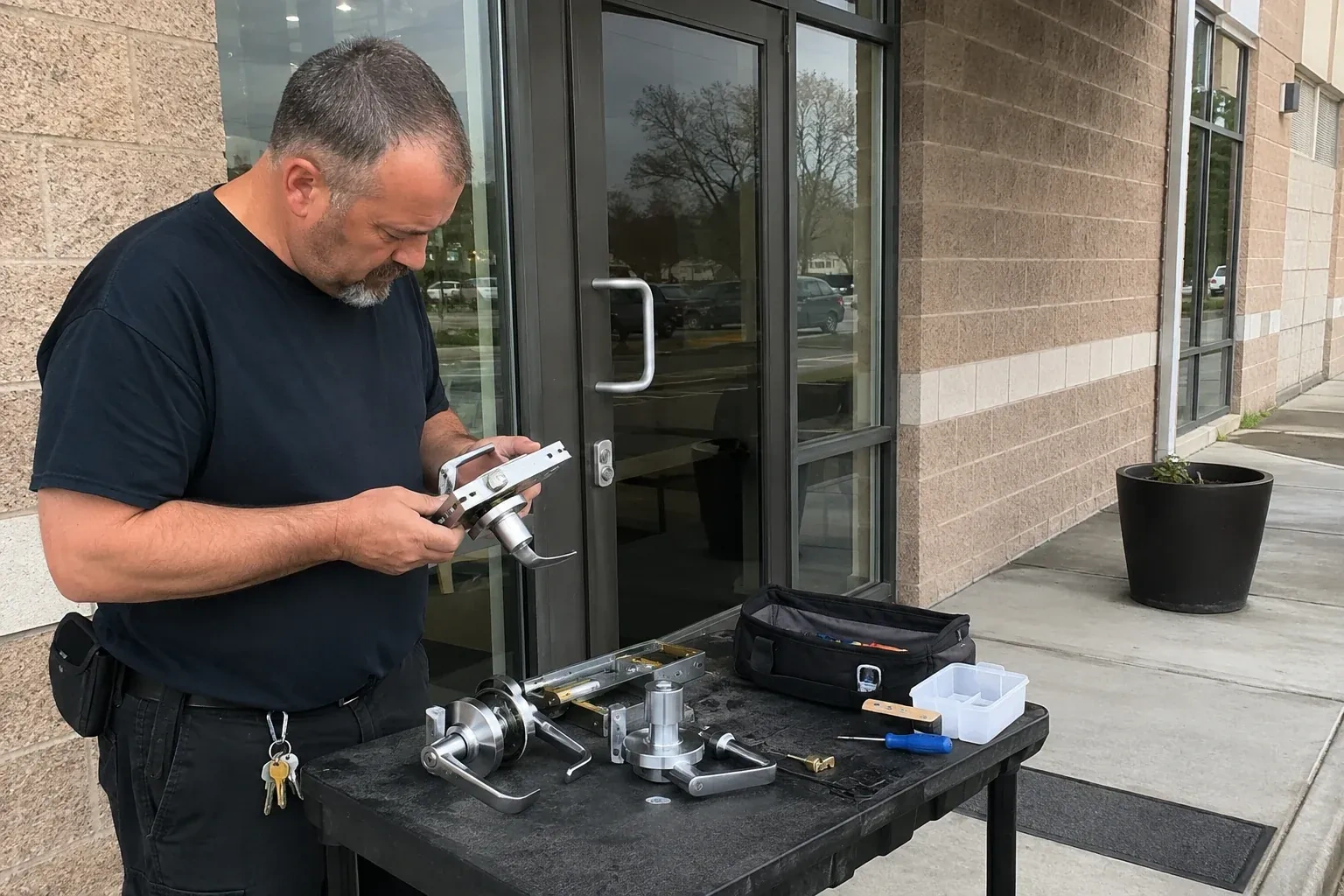
- Master Key System DesignThe new wing was built with its own brand of cylinder, so the two-year-old keys from the original…
- Panic & Exit HardwareThe fire inspector's note is blunt: the banquet hall's second exit still turns on a deadbolt, and…
- Commercial-Grade Lock ReplacementA new tenant moved into the unit next door, and the property manager just found three different…
Access Control Installation near you
Every lock service we provide in Newton Brook starts with the same first step, which is looking at the door properly before deciding anything. The individual pages below explain what that look involves for each job, how the work is carried out, and what to expect from the hardware afterwards.